.webp)
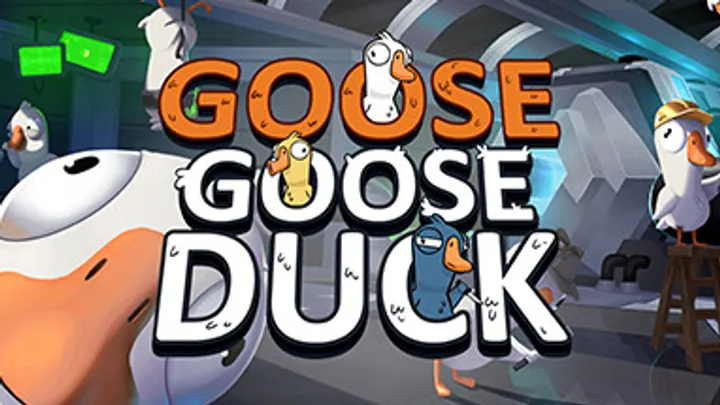




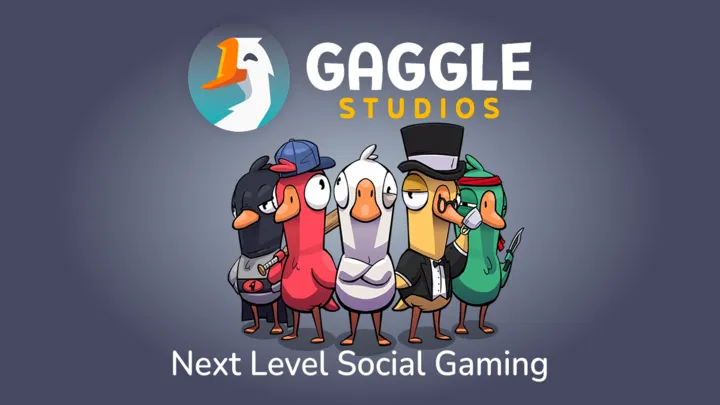
Goose Goose Duck transformed the social deduction genre by aggressively expanding the mechanical complexity established by its predecessors. While early social deduction games relied on a clean, binary divide between uninformed majorities and an informed minority, Gaggle Studios introduced a highly fragmented ecosystem populated by dozens of hyper-specialized sub-roles and highly volatile neutral factions. However, behind the colorful aesthetic and chaotic proximity voice chat lies a deep structural crisis: the issue of informational chaos caused by role inflation.
This article explores how the exponential growth of distinct roles has fundamentally damaged the deduction engine of the game. Over the course of a standard match timeline—from the initial, chaotic role-distribution phase to the high-stakes logic puzzles of the final meeting—we will track how excessive mechanical variables break traditional social deduction. By evaluating how specialized mechanics isolate players, distort voting logic, and induce mental fatigue, we uncover the underlying challenge of modern Goose Goose Duck: a game that is gradually shifting away from psychological manipulation and into an unpredictable, unresolvable math problem.

1. The Proliferation of Roles: How Structural Inflation Shattered Binary Deduction
In standard social deduction frameworks, deduction is a game of probability built on clean variables. The classic structure presents an innocent Goose who knows nothing, and a malicious Duck who knows who to kill. The introduction of dozens of specialized roles completely upends this math. In a modern lobby, a player is almost never just a "Vanilla Goose"; instead, they are a Vigilante, a Celebrity, an Astral, or a Detective, while the killers are Silencers, Assassins, or Identity Thieves.
This extreme diversification shifts the game from a test of psychological tracking to an absolute logistical nightmare. When a body is discovered, players cannot simply ask "Who was nearby?" and cross-reference simple alibis. Instead, they must sift through a dizzying maze of character-specific interactions. The core issue is that this structural inflation removes the collective baseline of truth, forcing the innocent faction to evaluate dozens of conflicting individual abilities simultaneously before they can even begin to hunt for genuine behavioral tells.
2. The Early-Game Chaos: The Fragility of Initial Pathing and Blind Claims
The opening two minutes of a Goose Goose Duck match are critical for establishing early baseline routing and building reliable alliances. However, role inflation introduces massive systemic interference during this opening phase. Because a significant portion of the lobby possesses active, high-impact abilities that can bypass traditional structural walls or vision mechanics, standard early-game pathing metrics lose their structural validity.
The Breakdown of Early Security:
- The Astral Disconnect: The Astral Goose can project their spirit through solid walls to scout rooms, completely detaching their visual perspective from their physical character location.
- The Pelican Threat: A neutral Pelican can swallow a player whole without leaving a corporeal body behind, causing traditional early-game map-splitting and path-tracking strategies to fail immediately.
- The Assassin Paranoia: The absolute terror of an active Assassin Duck prevents players from sharing their actual role identities early on, forcing the entire lobby into protective, anonymous lying.
This structural volatility forces an early-game breakdown in trust. Innocent players cannot safely declare their mechanical identity to build an analytical core group because doing so invites an instant, un-counterable execution by an Assassin Duck during the subsequent discussion phase.
3. The Neutral Faction Friction: Destabilizing the Voting Matrix
The mid-game phase of any social deduction match relies on a balancing mechanism during the voting sequence. Traditionally, the innocent group uses its numerical advantage to progressively weed out the killers. In Goose Goose Duck, however, the massive inclusion of complex Neutral Roles heavily distorts this core voting loop, completely fracturing the logical incentive structure of the lobby.
Roles like the Dodo or the Dueling Dodos actively sabotage the logical process because their explicit mechanical goal is to get themselves voted out of the game. When an innocent player presents airtight analytical proof that another player is lying, the rest of the lobby cannot confidently vote for that target. The terrifying risk that the liar is actually a Dodo manipulating the meeting to steal an instant victory paralyzes the voting matrix, allowing real Ducks to hide in plain sight behind the shield of neutral chaos.
4. The Erasure of Evidence: How Mechanical Cleanup Suppresses Core Deduction
A fundamental pillar of any murder mystery is the preservation of the crime scene. In traditional social deduction, a dead body serves as an anchor point for logic, allowing players to calculate movement speeds, travel distances, and timeline constraints. Goose Goose Duck systematically dismantles this investigative foundation through explicit mechanical cleanup roles that completely erase physical evidence from the map.
The Undertaker Duck can slowly drag corpses into hidden rooms or disposal vents, while the Identity Thief Duck morphs into the exact appearance of their victim upon executing a kill. This immediate erasure of physical data shifts the focus of the discussion away from map mechanics and deep into purely verbal confrontations. If a body is completely dissolved or hidden, the Geese lose their primary mathematical anchor, reducing the entire round of deduction to a chaotic guessing game dominated by the loudest voice in proximity chat rather than actual structural proof.
5. Mid-Game Vision Contraction: The Sabotage Economy and Spatial Disorientation
As matches enter their defining mid-game loops, the Duck faction deploys global map sabotages to force groups to separate. While simple blackouts are standard fare, the specialized role eco-system amplifies these events into moments of total spatial disorientation. When the lights go out or a smog event is triggered, the interaction of specific character passives creates massive informational asymmetry.
For instance, the Stalker Duck can see the exact tracking arrows of their targeted victim even through total darkness, while a Falcon maintains their independent hunting vision. The regular Geese are left completely blind, separated from their partners, and stripped of their ability to verify adjacent events. This systematic blindness means that mid-game positioning data becomes completely corrupted; players cannot reliably report who they were standing next to during a lights-out sequence, turning the subsequent meeting into a flood of contradictory eyewitness statements.
6. The High-Ground Mechanics of Upgrades: Tainted Logic of the Mechanics Room
In maps like the Mothergoose or the Nexus, specific mechanical rooms allow Geese to view security feeds or access inter-room teleporters. While these stations are designed to give the innocent faction a strategic advantage, role inflation successfully weaponizes these tools against them. A Goose sitting on security cams is often operating under a false sense of absolute clarity.
The Visual Corruption Mechanics:
- The Morphling Disguise: A Duck can consume the DNA of an innocent player and transform into them, walking directly past a security camera to commit a kill under a stolen identity.
- The Silencer Lockdown: A Silencer can mute a critical witness before a body is reported, preventing them from typing or speaking during the subsequent meeting to expose what they saw on the monitors.
- The Snoop Venting: The Snoop Goose can hide inside structural vents to spy on rooms, but this exact mechanical behavior perfectly mimics the movement style of a standard Duck, frequently leading to disastrous friendly-fire accusations.
7. The Dilution of Corroboration: The Structural Failure of the Buddy System
To survive the mid-game slaughter, players naturally fall back on the classic "Buddy System"—pairing up with another player to mutually verify their innocence. In a simplified role environment, this is an incredibly effective defensive strategy. In Goose Goose Duck, however, the structural inflation of roles renders the buddy system completely obsolete and highly dangerous.
Because roles like the Lover mechanic tie the survival of a Goose and a Duck together into a shared separate win-condition, a paired duo can easily manufacture completely fake alibis to protect each other. Furthermore, if your assigned "buddy" is secretly a Vulture waiting for you to get killed so they can consume your corpse, their defensive tracking is merely an exercise in predatory patience. This dilution of corroboration means that even absolute, two-man visual verification can no longer be trusted by the larger group, entirely breaking down collective strategic security.
8. Advanced Deception Loops: The Mimic and the Threat of Fake Roles
In the deep end of late-game progression, the structural issue of informational chaos reaches its peak with the introduction of identity-blurring roles like the Mimic. The Mimic Goose possesses the ability to appear to the Duck faction as a fellow killer, turning the wolves against each other but also introducing a massive layer of paranoia into the evil communication network.
This creates an exhausting mechanical deception loop. In meetings, a player claiming to be a Mimic to explain why they were seen running out of a Duck-only vent space might be an actual innocent genius—or they could be a real Duck executing an incredibly layered double-bluff. The shear volume of these potential narrative permutations overloads the analytical capacity of the lobby. Players are forced to evaluate three or four layers of hypothetical intent behind every single statement, causing the rational deduction process to entirely collapse under the weight of logical ambiguity.
9. Late-Game Mechanical Exhaustion: The Mental Fatigue of the Final Five
When a match whittles down to the final five surviving players, the structural density of remaining roles creates a state of acute mental fatigue. In a pristine social deduction scenario, the final five is a clean masterclass in logic, tracking who went where and calculating the remaining killer count. In Goose Goose Duck, the final five often features an unresolved mix of surviving neutrals, dead-role passives, and active cooldown statuses.
If the remaining pool contains a Pelican, a Demolitionist Duck, and a Vigilante Goose, the game no longer operates on standard democratic voting rules. The immediate priority shifts away from civil discussion and devolves into a raw mechanical reaction race. Can the Vigilante execute their manual kill button before the Pelican swallows them whole? Can the remaining Geese rush to finish their individual tasks to force a win before the Duck's bomb timer ticks down? The intellectual debate of the meeting table is completely replaced by raw mechanical button-mashing, exposing the structural erosion of the game's social core.
10. Cognitive Overload in the Meeting: The Loss of the Conversational Core
The ultimate consequence of role inflation in Goose Goose Duck is the fundamental destruction of the conversational core during the voting phase. Social deduction is at its best when it is a game of human psychology, vocal inflections, and behavioral tracking. When a meeting is called in a high-inflation lobby, the limited discussion timer is almost entirely consumed by a dry, exhausting roll call of role descriptions and mechanical definitions.
Players spend their limited speaking windows yelling over each other to explain how their specific character cooldown interacts with the map mechanics, leaving zero time for actual psychological interrogation or behavioral analysis. The game ceases to be about "Who is acting suspicious?" and instead becomes an unmanageable spreadsheet of conflicting operational variables. This cognitive overload alienates purists of the genre, turning a brilliant psychological party game into a frustratingly cluttered technical debate.
Conclusion
Goose Goose Duck’s ambitious expansion of the social deduction genre has proven to be a double-edged sword. By systematically tracing the structural impact of role inflation—from the initial confusion of early-game pathing to the mechanical chaos of late-game meetings—we see that the game’s greatest strength is also its greatest vulnerability. The introduction of dozens of specialized roles and complex neutral factions has successfully injected endless replayability and chaotic entertainment into the formula.
However, it has done so at the direct cost of deductive clarity. The game has transitioned away from a pure psychological sandbox into a volatile, hyper-frenetic brawler of conflicting mechanics. For Goose Goose Duck to maintain its long-term strategic depth, its evolution must move toward balancing these chaotic variables, ensuring that the human element of deception and discovery is never completely buried beneath a mountain of mechanical role clutter.