BONELAB – The Complete Expert Guide to VR Physics, Combat, Sandbox Gameplay, and Immersive Virtual Reality
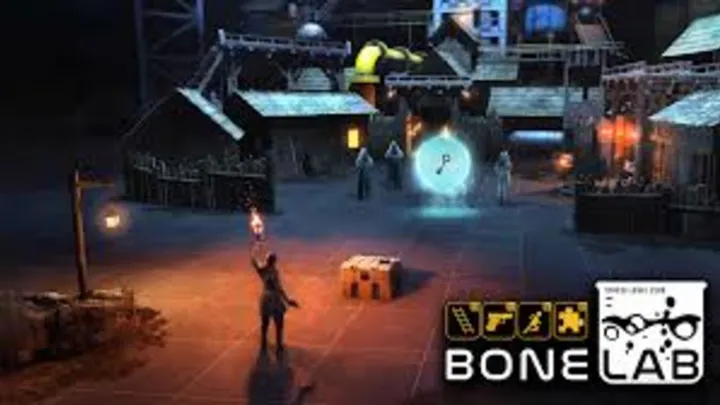
BONELAB is one of the most advanced and ambitious virtual reality games ever created. Developed by Stress Level Zero, BONELAB pushes VR technology beyond traditional gameplay by focusing on realistic physics, immersive interaction, sandbox experimentation, and unrestricted player freedom. As the spiritual successor to Boneworks, the game expands nearly every mechanic introduced in earlier projects while introducing deeper customization systems and more creative gameplay possibilities.
Unlike many VR titles that focus on short experiences or simplified mechanics, BONELAB attempts to create a complete physics-driven virtual world where almost every object can be touched, manipulated, thrown, climbed, or destroyed naturally. This commitment to realism creates one of the most immersive VR experiences available today.
The game combines action combat, environmental puzzles, exploration, parkour movement, and sandbox creativity into a single experience. Players are encouraged to experiment with the world rather than simply follow scripted objectives. This design philosophy gives BONELAB an identity that feels fundamentally different from most modern games.
This comprehensive article explores BONELAB in detail, following the natural progression of player experience from beginner introduction to advanced gameplay mastery. Each section examines gameplay systems, physics mechanics, combat design, strengths, weaknesses, and long-term replay value while maintaining a professional and expert writing style.
Introduction to BONELAB and Its Core VR Philosophy
BONELAB is built around the idea of total player interaction. Instead of limiting movement and object manipulation, the game encourages realistic physical engagement with the virtual world.
Players can climb structures, carry heavy objects, solve environmental puzzles, and engage in combat using realistic body movement. Every action feels connected to physics and momentum, making immersion significantly stronger than in traditional VR titles.
The game places players inside mysterious experimental environments filled with hidden secrets, dangerous enemies, and simulation-based challenges. Rather than relying entirely on narrative storytelling, BONELAB allows gameplay and environmental interaction to become the primary source of immersion.
Core Gameplay Features
- Full-body VR physics simulation
- Realistic environmental interaction
- Advanced combat systems
- Sandbox experimentation
- Avatar customization mechanics
- Community modding support
These systems establish BONELAB as one of the most technically impressive VR games currently available.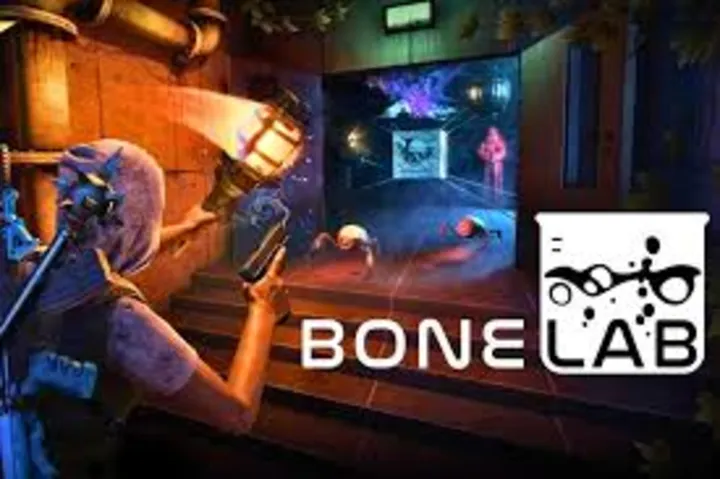
Beginning the Adventure – Learning the Basics of VR Interaction
The opening stages of BONELAB focus heavily on teaching players how to interact naturally with the environment. Unlike many VR games that simplify controls, BONELAB expects players to move and manipulate objects realistically.
Players learn climbing mechanics, object handling, inventory systems, and physical movement through tutorial-style challenges. Initially, the controls may feel overwhelming, especially for newcomers to VR.
However, once players adapt to the physics systems, the game becomes incredibly immersive and rewarding. Every movement feels meaningful because the player’s body directly affects gameplay.
Beginner Gameplay Objectives
- Learn movement controls
- Practice climbing mechanics
- Understand inventory systems
- Interact with physical objects
- Experiment with environmental tools
This early phase builds the foundation for more advanced gameplay later.
Physics Systems and Environmental Interaction
The physics engine is the defining feature of BONELAB. Almost every object obeys realistic physics rules, including weight, momentum, collision, and force.
Players can stack objects to create pathways, throw environmental items as weapons, or use physical interactions to solve puzzles creatively. Unlike scripted games with limited solutions, BONELAB often allows multiple approaches to the same challenge.
The environment itself becomes part of gameplay. Objects are not simply decorations—they are tools players can manipulate in countless ways.
Physics-Based Gameplay Activities
- Climbing walls and structures
- Throwing environmental objects
- Building temporary platforms
- Manipulating machinery
- Solving puzzles creatively
The freedom provided by these systems creates exceptional replay value.
Combat Mechanics and Weapon Systems
Combat in BONELAB combines firearms, melee combat, and environmental interaction into one immersive system. Every weapon feels physical because players must manually aim, reload, and manage recoil using VR motion controls.
Melee combat is equally impressive. Players can punch enemies, swing blunt weapons, or improvise attacks using nearby objects. The realism of the physics system makes every encounter feel dynamic and unpredictable.
Gunplay is particularly immersive because recoil, weapon weight, and aiming stability all influence performance.
Main Weapon Categories
- Pistols
- Assault rifles
- Shotguns
- Melee weapons
- Throwable environmental objects
Combat remains engaging because players constantly discover new ways to approach encounters.
Avatar Switching and Character Customization
One of BONELAB’s most innovative mechanics is its avatar system. Players can switch between avatars with completely different body types, strengths, and movement capabilities.
Some avatars are large and powerful, allowing players to move heavy objects easily. Others are smaller and faster, enabling quick movement and access to tighter spaces.
This system directly affects gameplay strategy and puzzle-solving. Certain challenges become easier or harder depending on the chosen avatar.
Avatar Attributes
- Strength
- Speed
- Agility
- Height
- Weight distribution
The avatar system introduces variety and encourages experimentation with different playstyles.
Puzzle Design and Exploration Mechanics
Puzzles in BONELAB rely heavily on environmental interaction and physical thinking. Instead of traditional logic puzzles, players must use movement, object manipulation, and experimentation to progress.
Exploration is equally important because hidden areas often contain collectibles, weapons, or secret lore details. The game rewards curiosity and creative problem-solving.
Many puzzles support multiple solutions, reinforcing the game’s sandbox philosophy.
Puzzle Gameplay Features
- Physics-based problem solving
- Environmental traversal
- Hidden pathways
- Interactive machinery
- Multi-solution challenges
The puzzle design adds depth and pacing variety to the experience.
Sandbox Modes and Creative Experimentation
Beyond the main campaign, BONELAB offers sandbox modes where players can experiment freely without narrative restrictions.
Players can spawn enemies, weapons, props, and vehicles to create custom gameplay scenarios. These sandbox systems significantly increase replayability and creativity.
For many players, sandbox mode becomes the main attraction after completing the story campaign.
Sandbox Features
- Enemy spawning systems
- Vehicle experimentation
- Weapon testing
- Environmental customization
- Open-ended gameplay freedom
The sandbox structure transforms BONELAB into a creative VR playground.
Modding Community and User-Generated Content
The BONELAB modding community is one of the game’s greatest strengths. Players can create and share custom avatars, maps, weapons, and gameplay modifications.
Mods dramatically extend the game’s lifespan by constantly introducing new content and experiences. Some modifications improve realism, while others focus on humor or chaotic experimentation.
The accessibility of modding tools encourages creativity within the community.
Popular Mod Categories
- Custom avatars
- Weapon packs
- New maps
- Gameplay overhauls
- Visual improvements
The modding ecosystem ensures long-term replayability and community engagement.
Graphics, Audio Design, and VR Immersion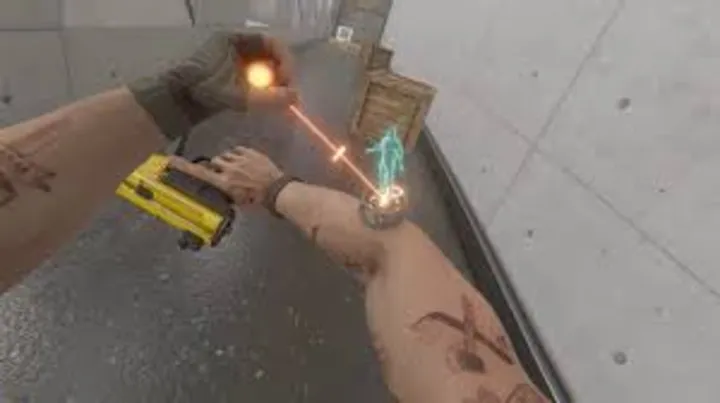
BONELAB delivers highly immersive VR presentation through detailed environments, realistic animations, and strong sound design.
Lighting effects and environmental detail create believable virtual spaces. Audio is especially important because directional sound helps players identify enemy positions and environmental activity.
The game’s immersion comes not only from visuals but also from physical interaction systems that make the world feel responsive.
Technical Highlights
- Realistic environmental lighting
- Smooth VR animations
- Positional sound effects
- Detailed object physics
- Immersive environmental design
These technical elements help BONELAB stand out among VR titles.
Overall Rating and Long-Term Replay Value
BONELAB succeeds because it prioritizes immersion, freedom, and creativity instead of limiting players with heavily scripted gameplay. The game encourages experimentation and rewards curiosity in ways rarely seen in VR gaming.
Players who enjoy physics-driven gameplay, sandbox systems, and immersive VR interaction will likely find BONELAB incredibly rewarding. Meanwhile, players seeking casual or simplified VR experiences may struggle with its complexity.
Category Ratings
- Physics and Interaction: 9.8 / 10
- VR Immersion: 9.5 / 10
- Combat Systems: 9.0 / 10
- Creativity and Sandbox Features: 9.6 / 10
- Replay Value: 9.4 / 10
Final Overall Rating
9.4 / 10
BONELAB stands as one of the most technically impressive and creatively ambitious VR games ever developed.
Conclusion
BONELAB represents a major evolution in virtual reality gaming by combining advanced physics systems, immersive interaction, sandbox experimentation, and realistic VR movement into one groundbreaking experience. Rather than limiting players to scripted sequences, the game encourages creativity and rewards experimentation at every stage.
From realistic combat and environmental puzzles to customizable avatars and community-created mods, BONELAB offers an experience that constantly evolves over time. Its sandbox philosophy and unrestricted interaction systems create gameplay moments that feel personal and unpredictable, making every session unique.
Although the game’s steep learning curve and demanding hardware requirements may present challenges for some players, its strengths overwhelmingly outweigh its weaknesses. The combination of immersion, freedom, and technical innovation establishes BONELAB as one of the most important VR titles of its generation.